
The 35-and-Irregular Hurdle: Seeking Data Without the Guesswork
For as long as I can remember, my menstrual cycles have been unpredictable. While I knew I was menstruating regularly enough to assume I was ovulating, actually catching that window was a total mystery. I spent years squinting at the faint lines of traditional over-the-counter ovulation predictor kits (OPKs) or anxiously waiting for digital smiley faces that rarely seemed to appear. It felt less like science and more like a stressful guessing game.
When my partner and I decided to actively start a family, the stakes changed. I had just turned 35, and we both felt the weight of the biological clock. We didn't have cycles to waste on generic calendar algorithms or vague apps. We needed precise, real-time, personalized biometric data.
My deep dive into fertility tech led me to two highly rated but completely opposite approaches: Inito and kegg. Inito tracks hormone metabolites excreted in your urine while kegg tracks the changes within your vaginal environment and cervical mucus.
Determined to cut through the marketing hype and find what actually worked for my irregular cycles, I decided to test them side-by-side for three full months. Here is what I discovered.
The Morning Hustle and Financial Drain of Urine-Based Monitors
My time with Inito started with high hopes, but it quickly devolved into a high-maintenance morning chore.
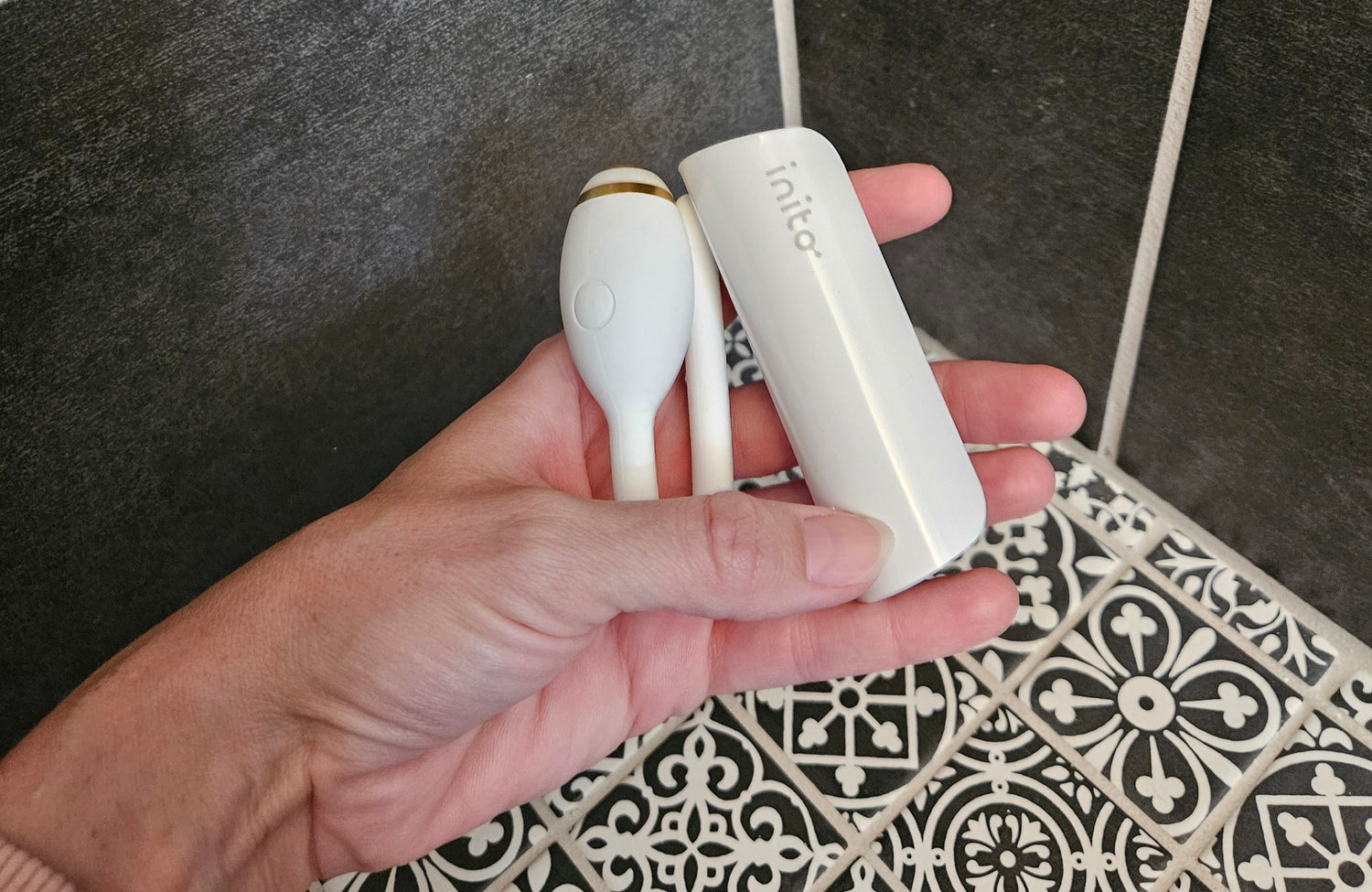
Because Inito relies on first-morning urine, my day began with immediate logistics. Half-asleep, I had to remember to collect a sample before doing anything else. Then came the phone assembly: you have to strip off your smartphone case so the custom Inito reader can clip precisely over your phone's camera lens. After dipping the test strip, attaching it, and waiting for the scan, I found myself constantly worrying. Did I drink too much water last night? Is my sample too diluted? Are these results even accurate today?
For someone with irregular cycles, the financial reality of this method hits hard. You can't just test for a few days and stop; you have to keep testing to find your baseline and catch a potential surge. I burned through test strips at an alarming rate. At roughly $49 per refill pack, what started as a tech investment quickly morphed into a costly, mandatory monthly subscription.
Beyond the daily hassle, the data felt frustratingly retroactive. While Inito eventually confirmed that ovulation occurred by picking up a rise in progesterone (PdG), it consistently failed to give me a definitive, early warning before my fertile window opened. I felt like I was tracking my cycle in the rearview mirror, realizing my most fertile days had already arrived or passed by the time the chemistry registered in my urine.
The Evening Ritual: How kegg Changed the Game
Switching my focus to kegg completely shifted my perspective on how cycle tracking should feel. Instead of forcing me into a messy morning urine routine, kegg measures an entirely different biological asset: your cervical mucus.
The routine couldn’t have been more seamless. I didn't have to think about it in the morning at all. Instead, every evening while winding down and getting ready for bed, I inserted the sleek, medical-grade kegg device for a quick, effortless 2-minute reading.
The device uses advanced sensing technology to send a safe, low-level electrical pulse that measures the fluid's electrical impedance. Essentially, as your body prepares for ovulation, your vaginal environment shifts to become a "sperm sanctuary." kegg senses these changes in real-time, mapping the exact opening of the fertile window right when it matters most.
The lifestyle upgrades were immediate:
- Zero Mess: No plastic cups, no chemical strips, and no long wait times.
- No Phone Drama: I never had to take my phone case off or clip hardware to my camera.
- One-Time Investment: Because it's a single purchase, my ongoing monthly tracking cost dropped to exactly $0.
What genuinely shocked me was how much earlier kegg identified my fertile days compared to urine testing. Because cervical fluid begins to shift well before hormones filter down into urine, kegg gave me a clear, 5-day heads-up before ovulation. For the first time, my partner and I could plan ahead with complete intimacy and confidence, rather than frantically rushing through last-minute windows.
As a lovely, unexpected bonus, kegg includes a built-in Kegel mode. It guided me through quick daily pelvic floor exercises, helping me actively strengthen the muscles I’ll need to carry a healthy pregnancy.
Proactive vs. Reactive: Why kegg Won My Journey
While Inito is an interesting piece of engineering, its strict testing rules, retroactive data flow, and compounding monthly costs introduced an unnecessary layer of anxiety into an already emotional process.
kegg gave me my mornings back and provided true, proactive clarity. It took the guesswork out of manually checking cervical mucus and transformed it into a clean, objective data point on my phone. For anyone navigating the twists and turns of irregular cycles, looking for real-time accuracy without a lifetime subscription to test strips, kegg is an absolute game-changer.
Editor’s Note: Why kegg Worked for Chloe
At kegg, Chloe’s breakthrough is exactly what our technology was built to achieve. While the wellness industry often promotes urine tracking as the gold standard, reproductive science shows that your cervical mucus is the true biological gatekeeper of conception.
kegg uses impedance technology to monitor the fluctuating shifts within your cervical mucus. In the early phases of your cycle, this fluid acts as a dense, highly acidic barrier to protect your reproductive track from bacteria. However, as estrogen rises prior to ovulation, the mucus transforms into a fluid, nutrient-rich channel designed to keep sperm alive and swimming for up to 5 days.
Peer-reviewed medical literature underscores why catching this fluid shift is so critical: Landmark studies by Dunson (2002) and Wilcox (2000) demonstrate that the 1-3 days before ovulation represent your absolute peak probability of conception. Here is the kicker: ovulation day itself has a lower chance of resulting in pregnancy. Because human eggs are only viable for 12-24 hours, having a reservoir of healthy sperm already waiting in the fallopian tubes before the egg makes its appearance is the most effective way to get pregnant.
Changes in cervical fluid occur before a luteinizing hormone (LH) surge can be detected in urine or a temperature shift registers on a thermometer. kegg directly captures the runway leading up to those peak 1-3 days. By measuring the vaginal environment directly, it eliminates the lag time of urine filtering, giving women (especially those with irregular cycles or PCOS) the full window of opportunity they need.
Combined with a one-time purchase model, an integrated pelvic floor trainer, and a comprehensive money-back pregnancy guarantee, kegg removes both the financial stress and the biological guesswork from your path to parenthood.
Scientific References
Dunson, D. B. (2002). Changes with age in the level and duration of fertility in the menstrual cycle. Human Reproduction, 17(5), 1399–1403. https://doi.org/10.1093/humrep/17.5.1399
Wilcox, A. J. (200). The timing of the "fertile window" in the menstrual cycle: day specific estimates from a prospective study. BMJ, 321(7271), 1259–1262. https://doi.org/10.1136/bmj.321.7271.1259